
John’s story: From chaos and crisis to independence, purpose and giving back
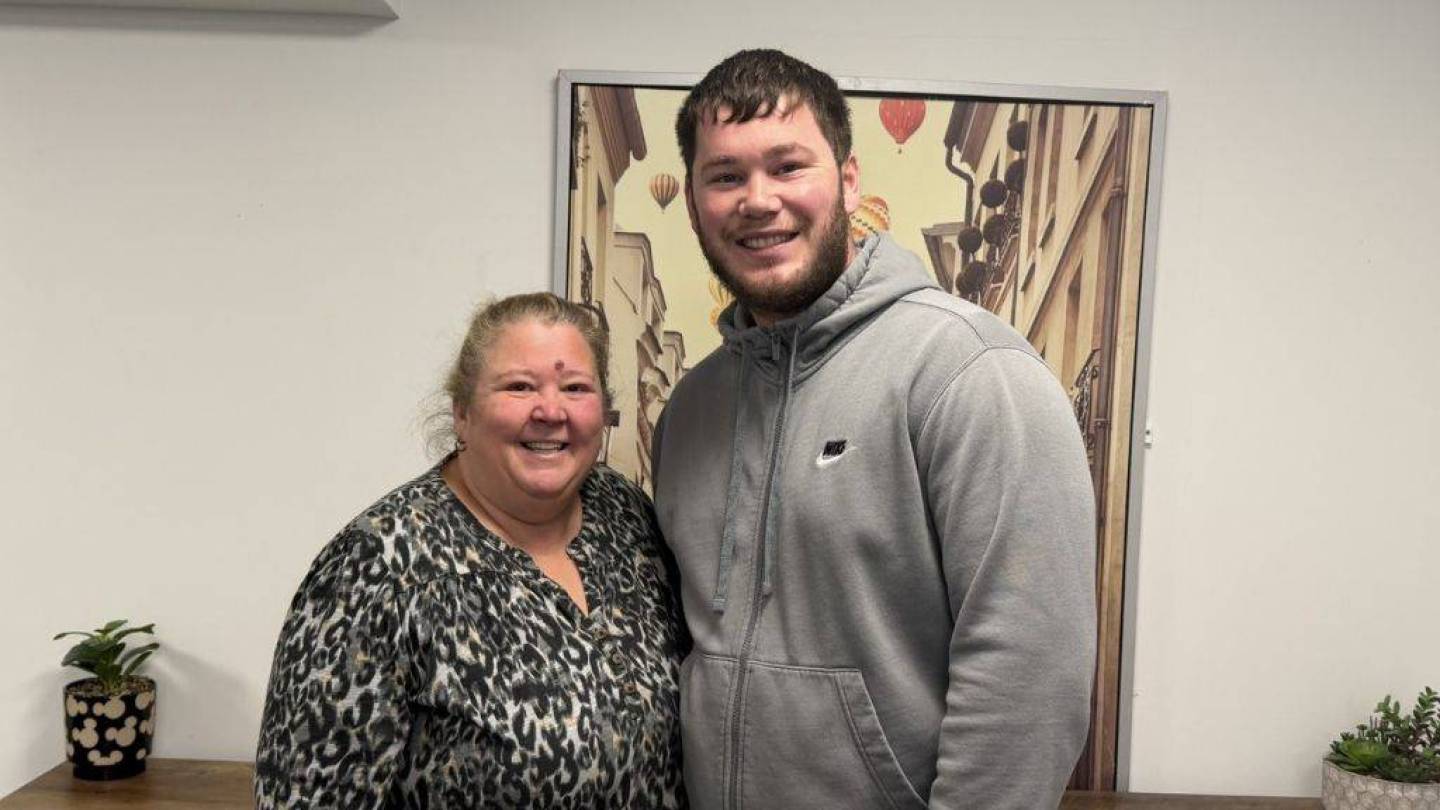
When John talks about his life, he does not hide from the hardest parts or soften them. He just tells the truth, and the truth is that his journey to independence has been anything but straightforward.
John’s difficulties began when he was still very young, life had already started to feel distorted, threatening and difficult to manage. John became caught in a spiral of serious mental ill health, trauma, paranoia and offending, and when he was just 16, he was sent to prison for reckless arson after setting fire to a hospital.
From there, he began a long and complex period spent moving through prison, being sectioned and moving through high secure hospitals, medium secure settings and forensic services. This was a time marked by prolonged fear, instability and confusion, before eventually being able to step into a Lifeways Supported Living service.
On paper, his story looked frightening. In person, you meet a warm, funny, grounded young man with sharp insight, a dry sense of humour and a striking ability to connect with others.
Today, John lives in the community, shares a house with his brothers, works full time, drives, travels independently and spends his days helping young people avoid the same paths he once took. It sits on the other side of years of serious mental ill health, offending, secure settings, prison, hospital care and a long road back towards stability.
Early days
Before his diagnosis of schizophrenia, John lived with paranoia and intrusive thoughts that shaped the way he moved through the world. He describes the constant sense of danger that followed him everywhere.
“When I was younger, paranoia was just normal to me, because that’s all I knew. I’d always be looking over my shoulder, always watching people, always thinking something was going to happen. In my head, I’d think, ‘They’re going to attack me, so I need to attack first.’
In prison it’s even worse, you’re on edge all the time, watching everyone, thinking something’s coming, thinking you’ve got to protect yourself. A lot of the time, nothing was happening at all, but in my head it was real.”
The turning point
For John, the turning point came in prison.
“I had to ring my mum and tell her I wasn’t coming home, and she was crying on the phone. That did something to me. I just thought, I can’t keep doing this to my family.”
From that point on, John began to face something difficult: that if his life was going to be different, he would have to be the one to make it different. Change did not happen overnight. There were still years of treatment, therapy, medication, restrictions and gradual progress ahead, but the decision had been made.
The beginning of understanding
After being resectioned, John was admitted to Ashworth High Secure Hospital before later moving to Guild Lodge Medium Secure Hospital.
For the first time, John began to understand what had been happening to him. He engaged in therapy, started taking medication and slowly built a clearer picture of his diagnosis and the patterns that had shaped his life.
“Before I got diagnosed, the way I was thinking just felt normal, because that was my normal. It was only when I started going to therapy and being on medication that I could start understanding myself more. I started to see that the paranoia, always expecting something bad to happen, wasn’t just how life had to be.”
He did the work because, as he says honestly, he knew he had to if he ever wanted to get out.
“If you don’t engage, if you don’t go to therapy, if you don’t take the medication, you’re not getting out. Even saying that, you still must put the work in, no one can do that part for you.”
John’s journey was not one dramatic turning point followed by a happy ending. It was years of slow, often difficult change. Years of treatment, learning and honesty with himself. Once John made that decision, he kept making it, again and again.
Finding the right medication and a different life
Central to John’s recovery has been the introduction of medication. He speaks candidly about how important that has been:
“Before medication, I was living in a constant state of threat, suspicion and fear. With the right treatment in place, combined with therapy and my own hard work, life began to feel different. Safer, more manageable and more real.”
Medication was not the whole answer. But together, with therapy, support and John’s own determination at the centre of it, those things created enough stability for a different future to feel achievable.
Coming to Lifeways Croft House
John came to Lifeways in 2021, several years into his recovery journey, and initially required additional oversight from Lifeways risk management process due to his forensic history. For him, Croft House was never about learning everything from scratch, but about having the right stepping stone between forensic services and full community independence.
That did not mean support was not needed. It just meant the support looked different. Rather than constant intervention, it was about help with the ordinary but important things that can pile up after years spent in systems where much of life is managed around you.
Kathryn Marshall, Service Manager at Croft House, remembers that although he did not need high-level support, those practical pieces really mattered:
“When somebody moves into the service, I’m always thinking ahead. I’m asking myself: what journey is this person likely to go on? Can I see them returning to hospital? Can I see them needing a different placement? Or can I see them building the skills and confidence to move into the community and live more independently? With John, it became clear quite quickly that he wanted more for himself. He had goals, he wanted opportunities, and he was prepared to put the work in to get there.
What he did need was steady help to keep things ticking over: letters, bills, housing benefit, practical things that can trip anybody up, never mind somebody who’s spent years in services where all of that’s been handled for them.”
She describes Croft House as a place that helped John bridge the final gap, not by holding him back, but by helping him move forward safely.
“It was about making sure the scaffolding was there while he needed it, and then being confident enough to take that scaffolding away. Some people wobble when that happens. John didn’t. He flourished.”
Family, support and learning to live differently
John is clear that recovery has not happened in isolation. Family has been a huge part of that story. His relationship with his mum has remained important throughout, and since coming out he has also rebuilt contact with his dad. He has reconnected with siblings and continued navigating the realities of family life.
Croft House supported him not just with housing and admin, but with the very human parts of life: relationships, family pressure, funerals, travel, online dating and difficult conversations.
Kathryn Marshall says that consistency made all the difference.
“We didn’t need to do life for John. He was capable. We were there to talk things through, help him think about risks, help him navigate situations and back him when he needed it. That’s what good support is: helping someone build the confidence to manage their own life.”
Some of the most moving parts of John’s story are not the biggest achievements on paper. They are the things many people might overlook. With support, John learned how to manage practical life independently: paying bills, passing his driving theory and practical test, navigating travel, booking holidays, maintaining relationships and spending time out in the community.
More than recovery
What makes John’s story so striking is that he did not stop at recovery. He rebuilt.
Today, he works full time for the Champions Programme, providing trauma-informed mentoring for young people at risk of serious harm, exploitation or offending. Since joining the programme in 2019 as a volunteer, John became a casual worker, then part time, and now works full time based at Preston North End Football Club. He mentors young people aged 10 to 25 referred through schools, police, social services or parents, using his own lived experience to connect in a way that cannot be taught from a textbook.
“I understand what it means to be a young person who does not trust systems, who feels judged, angry, defensive or shut down. I can say, with absolute honesty: I’ve been there, and that changes the conversation.”
Using his voice
As well as mentoring, John has become a powerful speaker. He delivers talks based on his own life story, the choices he made, the consequences that followed and the reality of what it took to turn his life around.
“We do talks called ‘been there, done that’. I tell them my story straight. I tell them what happened, where it led, what it cost me. I think people, especially kids, need to hear real stories, not just someone preaching at them, but someone who’s actually lived it.”
He has taken those talks into a range of settings, including schools and prisons, contributed to wider work around mental health in prison settings, including supporting university research and recorded content to help others understand what life inside those environments can be like, and has won a Hero Award through Community Gateway in recognition of the impact of his work.
Even with that recognition, John underplays his achievements. Kathryn Marshall says that one of the most powerful things about John’s story is not just what he has survived, but what he now gives back.
“He talks from the heart. He’s open, he’s honest, he shares his story in a way people really listen to. He’s actively using what he’s been through to help other people.”
Not the file. The person.
John knows that when people read his history on paper, they can be shocked. That is exactly why his story needs to be told. What is written in files is often only the record of someone at their worst, in crisis, illness and survival mode. It rarely captures the whole person.
John’s story is not about pretending the past did not happen. It is about showing what can happen after it. Although John moved into the community just over a year ago, he still comes back to visit Croft House. He returns because the relationships were real, the support was real and the place played an important part in his journey. Seeing John walk back through the door matters. It shows what is possible. That even if the journey is different for each person, moving forward is possible.
Today, John lives in the community, shares a house with his brothers, works full-time, drives, travels independently and spends his time helping young people avoid the same paths he once went down. He is trusted, grounded, funny, thoughtful and deeply self-aware, but John is not standing still.
He wants to keep travelling, continue developing his talks and work more in prisons in the future. He also wants to keep building on the work he is doing with young people, using his experience to help others make different choices.
John’s story is not just one of recovery from the past. It is one of momentum. From being considered one of the riskiest people in the system to becoming someone trusted to guide young people away from harm. From secure care to community life. From being defined by paperwork to standing in front of others and telling his story in his own words. John is no longer being spoken about. He is the one speaking now:
“It all starts with you, and it ends with you. If you don’t make the changes, nothing changes. If I hadn’t made them changes, I’d still be in that system now. Of course, I still have bad days and good days, like anyone else, but now I know how to manage them. I keep moving. I keep working. I keep choosing the life I’ve built.”
Related articles
Case study
14 October 2026
A familiar and trusted face at Alexandra Park
News

25 September 2026
£500k transformation begins at Lifeways Abingdon service in Southport
Case study
18 August 2026